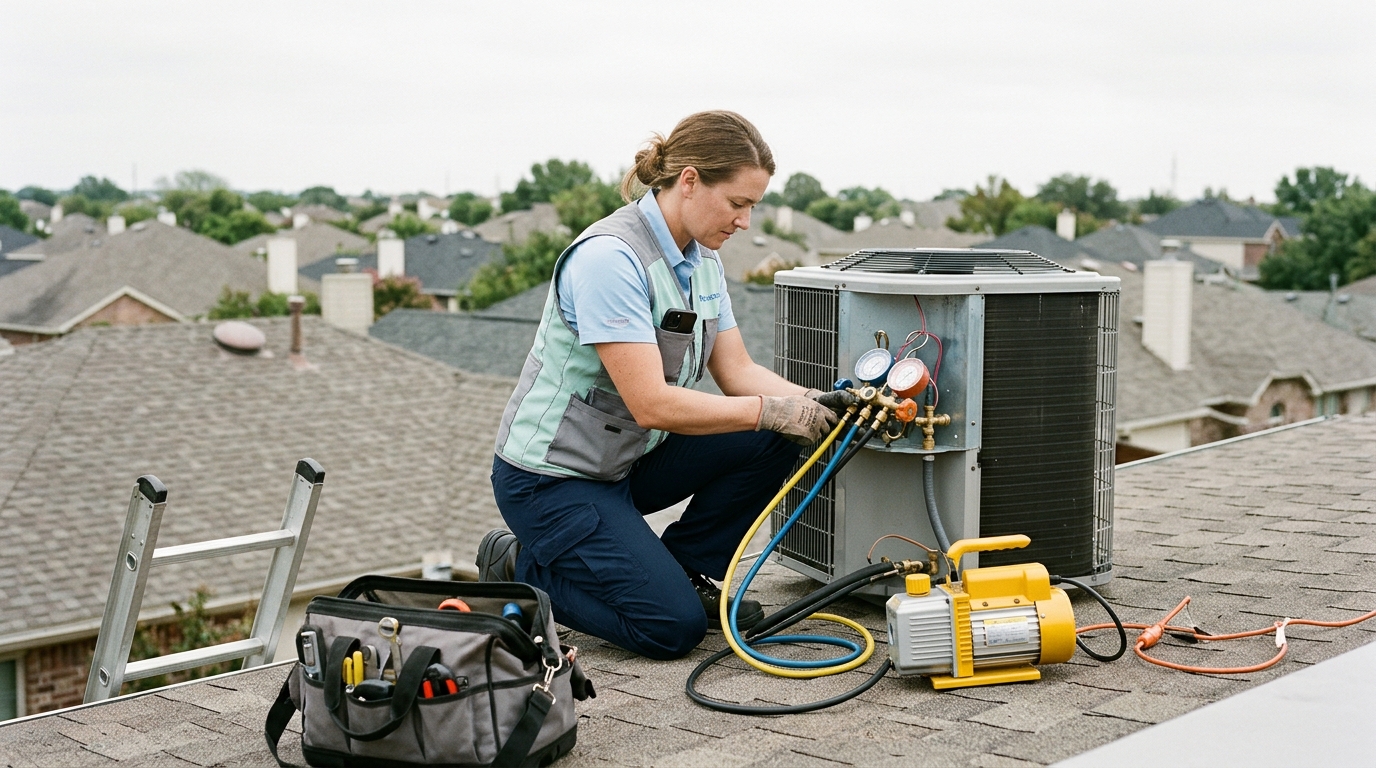
The most reliable way to stop missing calls on a job site is to put an AI receptionist like Tactly in front of your phone: it answers every call in seconds, captures the caller's name, number and job details, books appointments when you want it to, and sends you a transcript and summary so you can respond between tasks. You keep working with your hands full, and no caller reaches voicemail.
That is the short answer. The rest of this article explains why calls get missed, what a complete fix looks like, how the main options compare, and how to set up a system that works for plumbers, HVAC technicians, cleaners, landscapers, property managers, law firms and bakeries alike.
Why You Miss Calls on a Job Site (and What It Costs)
Missed calls are not a discipline problem. They are a physics problem. You cannot be under a sink, on a roof, in a courtroom, or elbow-deep in dough and also hold a phone conversation. Every service business hits the same wall, and it usually shows up in a few predictable ways:
- Hands and focus are occupied. Stopping a task to answer costs you time, and often safety, especially on ladders, in crawl spaces or around equipment.
- Noise and signal get in the way. Mowers, compressors, drills and basements make calls hard to hear or drop them entirely.
- Client-facing moments matter. Taking a call while standing in a customer's kitchen feels rude, so you let it ring.
- After-hours calls pile up. Emergencies like burst pipes, no-heat nights and lockouts do not arrive at 9 a.m. on a Tuesday.
- Voicemail gets ignored. Many callers hang up rather than leave a message, then dial the next business on the list.
The cost is straightforward to estimate for your own shop. Take the number of calls you miss in a typical week, multiply by the share that were new customers, then multiply by your average job value. A plumber who misses five new-customer calls a week at an average ticket of $350 is leaving $1,750 a week on the table, or roughly $91,000 a year. Even if only a third of those callers would have booked, the loss is still significant. A cleaning company, a landscaper or a law firm can run the same math with their own numbers and land in a similar place.
The key insight is that callers with an urgent problem rarely wait. They call several providers in a row and hire whoever picks up or responds first. Speed of response is often the deciding factor, not price.
The Five Ways to Stop Missing Calls
There are five realistic approaches. Most small businesses end up with a combination, but it helps to understand each on its own.
1. Answer Every Call Yourself
This works only when you are at your desk or truck. On a job site it fails repeatedly. It also trains you to be interrupted constantly, which slows your work and annoys the customer in front of you.
2. Hire a Receptionist or Office Admin
A full-time person is the most personal option, and for a growing company it can make sense. But it is a fixed cost, it covers only working hours, and it still leaves gaps for sick days, lunch breaks and holidays. For a one- to ten-person shop, the payroll rarely pencils out just for call handling.
3. Use a Live Answering Service
A live answering service routes calls to human agents who take messages or run a script. It solves the unanswered phone problem, but agents handle many businesses at once, they work from limited scripts, and you generally pay per minute or per call. Quality varies with whoever happens to answer.
4. Forward to Voicemail and Call Back
This costs nothing, which is its appeal. It also loses the most customers. People with a leaking water heater do not leave a voicemail and wait politely.
5. Use an AI Receptionist
An AI receptionist answers calls automatically, speaks naturally with the caller, collects the details you care about, and passes them to you in writing. It runs around the clock and does not get tired or put anyone on hold.
Where Tactly Fits: An AI Receptionist for People Who Work with Their Hands
Tactly is an AI receptionist built for small, service-based businesses. It picks up the phone when you cannot, so the caller talks to something helpful instead of a ringing line. Here is what that means in practice on a busy day.
- Calls are answered right away. Whether you are on a roof or asleep, the caller gets a response instead of a voicemail beep.
- Details are captured. Name, phone number, the address or service area, and what the problem is, so you know what you are walking into.
- Appointments can be scheduled. Callers who want a time slot can be booked without a back-and-forth of phone tag.
- After-hours calls are handled. Nights, weekends and holidays are covered the same as Tuesday at noon.
- You get transcripts and call summaries. Instead of replaying a garbled voicemail, you read a short summary in seconds and decide whom to call first.
Think of it as the front desk you could not afford to staff 24 hours a day, sitting quietly in your pocket. It does not replace your expertise or your relationships. It makes sure nobody who needs you slips away before you have the chance to help them.
AI Receptionist vs Live Answering Service vs Voicemail: Key Differences
If you are weighing options, this side-by-side comparison covers the points that matter most to a business owner working in the field.
| Factor | Recepcionista con IA | Servicio de contestación en vivo | Buzón de voz |
|---|---|---|---|
| Disponibilidad | 24/7, every call answered | Often 24/7, but limited by agent capacity | 24/7, but no live interaction |
| Wait time for callers | Answers in seconds, handles simultaneous calls | Can queue during busy periods | None, but callers often hang up |
| Information captured | Structured details, transcript and summary | Message notes taken by an agent | Whatever the caller chooses to say |
| Appointment scheduling | Can book directly | Usually takes a message only | Not possible |
| Consistencia | Same quality on every call | Varía según el operador | Depends on the caller |
| Cost pattern | Predictable, built for small budgets | Often per minute or per call | Free, but costs you lost jobs |
The practical takeaway: voicemail is free but leaks revenue, a live service solves the answering problem at a higher and more variable cost, and an AI receptionist gives you both coverage and organized information without scaling cost with call volume.
How Different Trades Use Call Answering on the Job
The same tool solves slightly different problems depending on your line of work. These examples show how the setup changes.
Plumbers and HVAC Technicians
Your calls are often urgent. A homeowner with water on the floor or no heat wants help now. The most valuable thing an AI receptionist does here is separate emergencies from routine requests. Set it up to ask whether the issue is an active leak, a total loss of heat or cooling, or a standard maintenance request. Emergencies get flagged so you can call back first. Routine jobs get booked into your schedule.
Servicios de limpieza
Cleaning customers tend to ask about the same few things: availability, frequency and the size of the home. Your receptionist can collect the home type, the preferred schedule and the address, then queue everything for a quote. You review the summary at the end of a cleaning and send an estimate without ever having stopped mid-task.
Paisajistas
You are outdoors with loud equipment for most of the day, which makes live calls nearly impossible. Seasonal spikes in spring and fall also flood your phone. An AI receptionist absorbs the surge, taking multiple calls at once so no one gets a busy signal during your busiest weeks.
Despachos de abogados
When attorneys are in court or in meetings, new client inquiries still arrive. The goal is a polished first impression and complete intake details: who is calling, what the matter concerns, and how urgent it is. Written summaries let you triage quickly, and callers feel heard instead of sent to voicemail.
Property Managers
Tenants call about maintenance at all hours, and prospective renters call about listings. A receptionist can sort maintenance requests from leasing inquiries, capture the unit and the issue, and make sure a true emergency like a flooded unit gets your attention immediately.
Panaderías
When your hands are in flour at 5 a.m., the phone is the last thing you can pick up. Custom cake orders, pickup questions and event inquiries can all be captured with details like date, quantity and flavor preferences, ready for you to confirm during a break.
Why Transcripts and Call Summaries Matter More Than You Think
Answering the call is only half the benefit. The other half is what you get afterward. When you are moving from job to job, you do not have time to listen to a three-minute voicemail with a bad connection. You need the essentials at a glance.
A good call summary tells you:
- Who called and the number to reach them
- What they need, in one or two sentences
- How urgent it sounds
- Any scheduling preference they mentioned
A full transcript backs this up. If a customer later says, "I told you the unit was on the second floor," you can check exactly what was said. Transcripts also reduce mistakes: no misheard phone numbers, no misspelled street names, and no half-remembered details from a call you took while driving.
Over time, the record becomes useful for the business itself. You can see which services callers ask about most, what time of day calls spike, and which questions come up repeatedly. That feeds smarter decisions about staffing, pricing and what to put on your website.
How to Set Up Call Answering So You Stop Missing Calls
You do not need a complicated rollout. A clean setup follows a handful of steps, and you can finish the thinking part in an afternoon.
- List the questions callers always ask. Hours, service area, whether you handle a certain type of job, how quotes work. These become the receptionist's talking points.
- Decide what you need from every caller. At minimum: name, number, address or location, and the problem. Add trade-specific details like equipment type, home size or case type.
- Define qué cuenta como emergencia. Write it in plain terms, such as active water leak, no heat in winter, lockout, or flooding. Decide how you want to be alerted for those.
- Choose your booking rules. Which services can be scheduled directly, how much buffer you need between jobs, and which days or hours are off limits.
- Configura el desvío de llamadas. Forward your business line to your receptionist when you are busy, unanswered, or after hours, so your main number stays the same on trucks, signs and listings.
- Test it yourself. Call your own number from a different phone. Ask the questions a customer would ask, including awkward ones, and adjust anything that sounds off.
- Review summaries daily for the first two weeks. Look for questions that were not answered well and update your instructions.
If your website helps customers reach you, a contact form and online booking on your website give people a second route in when they would rather not call. Both feed into the same follow-up routine, so nothing gets lost.
A Daily Routine That Keeps You Responsive Without Stopping Work
Technology handles the answering. You still need a simple habit for the follow-up. Here is a rhythm that works for most field-based owners.
- Between jobs: Spend two minutes scanning new call summaries. Flag anything urgent.
- At lunch: Return the callbacks that need a personal touch, such as estimates and complicated questions.
- End of day: Confirm tomorrow's bookings and clear any leftover messages.
- Weekly: Scan the pattern of calls. Notice busy hours, frequent questions and jobs you turned down, then adjust your instructions.
The aim is not to be glued to your phone. It is to make sure that when you do look, everything you need is already sorted and waiting.
Mistakes to Avoid
- Leaving instructions vague. If you do not say what counts as an emergency, the system cannot prioritize. Be specific.
- Skipping the test call. You will catch awkward phrasing and missing information in five minutes of self-testing.
- Ignoring the summaries. Answered calls only help if you act on them. Build the two-minute check into your day.
- Changing your number. Keep the number customers already know and forward it instead.
- Waiting too long to call back. A fast callback after a captured inquiry still wins jobs. Aim to respond within the same business day, and within the hour for emergencies.
The Bigger Picture: Better Customer Service Without More Overhead
Customers judge small businesses on responsiveness. A call that is answered promptly, politely and with useful next steps signals that you are reliable before you ever show up. That first impression carries into reviews, referrals and repeat work.
For service businesses, communication is moving toward systems that are always on, written down and easy to search. Owners who adopt them early get a practical edge: more booked jobs from the same number of calls, fewer evenings spent returning messages, and a clear record of every conversation. You do not need to become a tech expert. You need the phone to stop being the reason you lose work.
Missed Calls on a Job Site FAQ
How can I stop missing calls when I'm on a job site?
Use an AI receptionist such as Tactly to answer every call automatically, capture the caller's details, book appointments if you choose, and send you a transcript and summary. Keep your existing number and forward calls when you are busy or after hours so customers never reach a dead end.
Is an AI receptionist better than a live answering service for a small trade business?
For most small trade businesses, yes. An AI receptionist answers in seconds, handles several calls at once, and delivers structured summaries and transcripts. A live answering service typically relies on human agents who take messages and can be limited by capacity and scripts.
What should I do about emergency calls when I can't pick up?
Define what counts as an emergency, such as an active leak, no heat or a lockout, and set your receptionist to ask about it and flag those calls. Check summaries between tasks so urgent callers are the first people you phone back.
Will customers be annoyed that they are not speaking to me right away?
Most callers care more about getting a fast, helpful response than about who answers. A prompt, polite answer that captures their issue and promises a callback beats a ringing line or voicemail, which many people hang up on.
How long does it take to set up call answering for my business?
The preparation takes about an afternoon: list common questions, decide what details you need, define emergencies, set booking rules and forward your number. Spend the first two weeks reviewing summaries and refining instructions so the system matches how you work.
