Tactly is an AI receptionist for small businesses that answers calls in English and Spanish, so a caller who speaks either language gets a live, natural conversation instead of voicemail. If your customers in North America switch between the two languages, a bilingual AI receptionist picks up every call, 24 hours a day, and sends you a transcription and a call summary afterward.
That is the short answer. The rest of this guide covers what "answers in Spanish and English" should mean in practice, how bilingual call handling works, what to check before you commit, and how plumbers, HVAC technicians, cleaning services, law firms, property managers, landscapers and bakeries use it day to day.
Why bilingual call answering matters in North America
Spanish is the second most spoken language in the United States, and it is a major language across Mexico and many Canadian and U.S. communities. Whatever your city, a meaningful share of your potential customers prefer to speak Spanish when they call a business, especially when the call is urgent, expensive or confusing.
Think about who calls a service business:
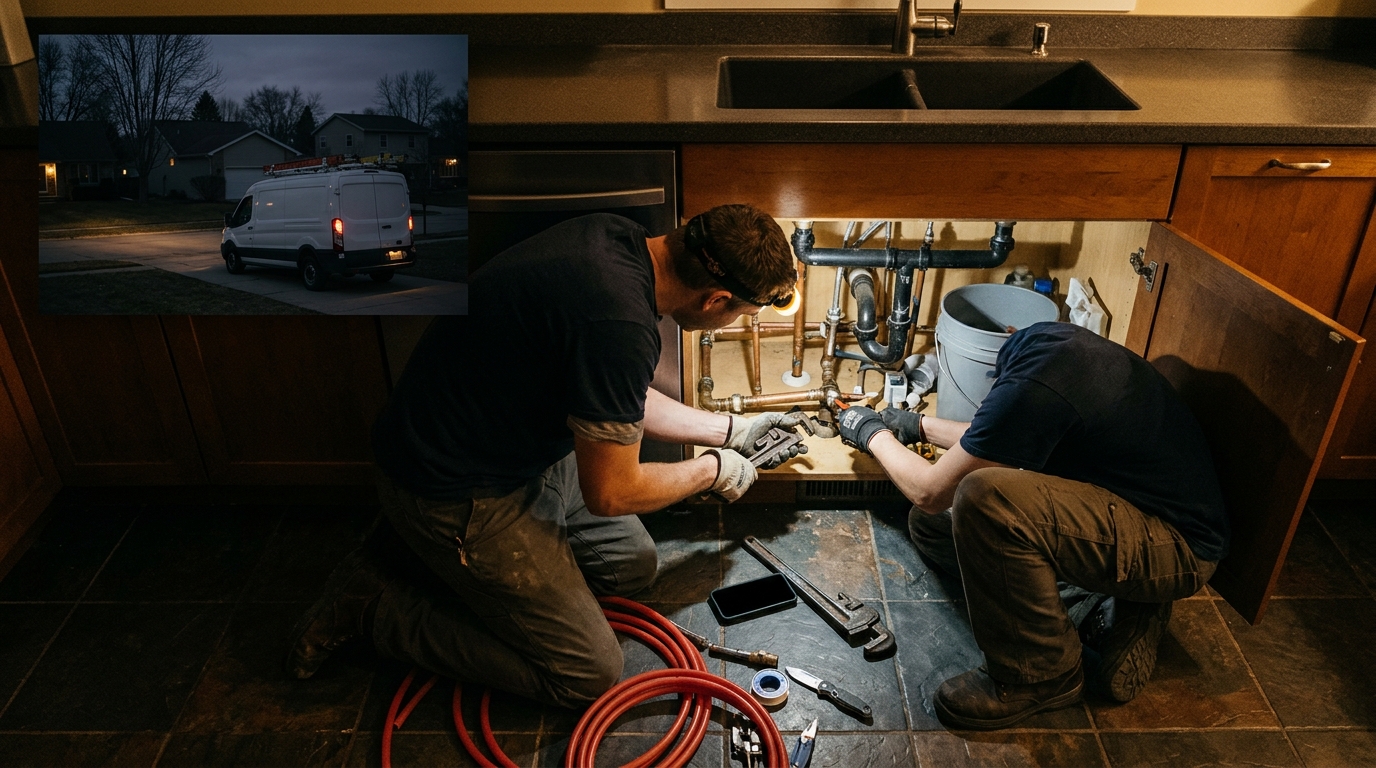
- A homeowner with a burst pipe at 9 p.m.
- A tenant reporting a broken heater to a property manager.
- A family asking a law firm about an immigration or injury matter.
- A restaurant owner ordering a large bakery tray for an event.
These callers are stressed or making a decision with real money attached. If the first thing they hear is a voicemail greeting in a language they are less comfortable with, many hang up and call the next business on the list. You never see that lost call. It simply does not show up in your records.
A bilingual AI receptionist closes that gap. The caller speaks the language they are comfortable with, gets their question handled, and you get a clear record of what was said.
What "answers in Spanish and English" should actually mean
Many tools claim language support, but the level varies widely. A genuinely bilingual AI receptionist does more than read a Spanish greeting. Use this checklist when you evaluate any option, including Tactly.
- Speaks both languages in a live conversation. The caller can ask questions, answer questions and change their mind mid-call, in either language.
- Understands the caller's language without a menu. Forcing people to "press 2 for Spanish" adds friction. The better experience is a natural greeting and a smooth response in whichever language the caller uses.
- Handles code-switching. Many bilingual speakers mix English and Spanish in one sentence. A good system keeps up.
- Captures names, addresses and phone numbers accurately. Spanish names and street names are where weak systems stumble.
- Delivers records you can read. The transcription and call summary should be useful to you even if you do not speak both languages fluently.
Where Tactly fits this question
Tactly is built for small, service-based businesses that cannot staff a phone around the clock. It answers incoming calls with an AI receptionist, speaks English and Spanish, helps callers book appointments, handles after-hours calls, and gives owners a transcription and a summary of every conversation.
In plain terms, here is how Tactly fits a bilingual business:
- A caller speaks English or Spanish, and Tactly answers in that language.
- Tactly gathers the details you need, such as who is calling, what they need and how to reach them.
- Appointment requests are handled as part of the call.
- You receive a transcription and a summary, so you know what happened without listening to recordings.
Tactly is not a replacement for your judgment or your craft. It is the front desk that makes sure no call goes unanswered while you are on a roof, under a sink, in court or at the oven.
Bilingual AI receptionist vs bilingual live answering service
The other common route is a live answering service that offers Spanish-speaking agents. Both can work, but they differ in ways that matter for a small business budget and schedule.
| Factor | Bilingual AI receptionist | Bilingual live answering service |
|---|---|---|
| Availability | 24 hours a day, every day, with no shift gaps | Depends on which Spanish-speaking agents are on shift |
| Wait time | Answers immediately, even during busy periods | Callers can queue when agents are busy |
| Language consistency | Same quality in English and Spanish on every call | Varies by individual agent |
| Knowledge of your business | Uses the details you set up, the same way each time | Agents juggle many clients and scripts |
| Records | Transcription and summary of every call | Message notes, with detail depending on the agent |
| Scaling on busy days | Handles many calls at once | Limited by the number of agents available |
The biggest practical difference is the Spanish-language coverage window. A live service may have Spanish speakers available only during certain hours. An AI receptionist speaks Spanish at 2 a.m. on a Sunday exactly as it does at 10 a.m. on a Tuesday.
How a bilingual call actually plays out
Here is a realistic example for an HVAC company. A caller phones at 7:40 p.m. on a cold evening.
- The AI receptionist answers with the company greeting.
- The caller responds in Spanish: the furnace stopped working and the house is getting cold.
- The AI continues in Spanish, asks for the caller's name, address and phone number, and asks a few questions about the problem.
- It offers appointment options based on your availability.
- The call ends with a confirmation. You get a transcription and a summary, so you can see the issue, the address and the booked time at a glance.
Without this, that call goes to voicemail. Many callers do not leave a message, and the ones who do often leave a partial phone number or none at all. A captured, summarized call is the difference between a booked job and a missed one.
Why transcriptions and summaries matter more in two languages
If you or your team do not speak Spanish fluently, a written record becomes essential. A transcription shows exactly what the caller said. A summary gives you the point in a few lines: who called, what they need, how urgent it is and what to do next.
This helps in several ways:
- Accuracy. You do not rely on someone's memory of a phone call.
- Speed. You can scan a summary between jobs in under a minute.
- Accountability. If a customer disputes what was agreed, you have the record.
- Training. You can see which questions customers ask most and improve your pricing pages, service descriptions or intake steps.
For law firms and property managers, the record also supports documentation habits. For plumbers and landscapers, it means the crew heading out already knows the address and the problem.
Bilingual call handling by business type
Plumbers and HVAC technicians
Emergencies drive these calls. Callers want to know that someone is coming. A bilingual AI receptionist collects the address, the problem and the best phone number, and books the visit. After-hours coverage matters most here, because a burst pipe or a dead furnace does not wait for business hours.
Cleaning services
Customers ask about home size, frequency and timing. Many cleaning companies employ Spanish-speaking staff and serve Spanish-speaking clients. A bilingual receptionist lets both sides communicate clearly from the first call and sets up recurring appointments without back-and-forth.
Law firms
First impressions carry weight. A caller who reaches a friendly, responsive intake in their own language is more likely to stay on the line and share their situation. The AI collects contact details and a brief description of the matter, and the summary lets an attorney or staff member follow up promptly.
Property managers
Tenants call about maintenance, lockouts, rent questions and noise. A bilingual receptionist can log each request in the caller's language and give you an organized list. Urgent issues stand out in the summary so you can dispatch quickly.
Landscapers
Landscaping calls spike in spring and after storms, exactly when crews are outdoors and cannot answer. A bilingual AI receptionist captures quote requests and schedules estimates while you work.
Bakeries
Bakeries get calls about custom cakes, large orders and pickup times, often when the staff has flour on their hands and a line at the counter. The AI takes the order details in English or Spanish so the counter staff can stay focused on customers in front of them.
Setting up a bilingual AI receptionist for your business
Setup is simpler than most owners expect. The work is mostly deciding what you want callers to hear and what you want captured. Follow these steps.
- List your services and hours. Write down what you offer, when you are available and which calls count as urgent.
- Decide what to collect on every call. Typical fields are name, phone number, address, the reason for the call and preferred time.
- Define your booking rules. Decide which appointment types callers can request and how much notice you need.
- Choose your after-hours approach. Decide what is an emergency, who gets notified and what can wait until morning.
- Test in both languages. Call your own number and speak English, then Spanish, then a mix. Check how names and addresses come through in the transcription.
- Review summaries for the first two weeks. Adjust the details you provide based on what callers actually ask.
Testing in both languages is the step most owners skip. Spend ten minutes on it. Use real street names from your service area and a few Spanish surnames to see how accurately they are captured.
Managing after-hours calls in two languages
After-hours calls are where bilingual coverage pays off fastest. Roughly a third of the week falls outside a typical Monday to Friday, 9 to 5 schedule once you count evenings and weekends, and customers call during all of it. A voicemail box is a poor substitute, because many callers will not leave a message at all.
A good after-hours setup includes:
- A clear way to flag emergencies versus routine requests.
- Booking for the next available slot when the issue can wait.
- A summary waiting for you first thing in the morning, or sooner for urgent calls.
- The same quality of service in Spanish as in English.
Common mistakes with bilingual call answering
- Only translating the greeting. A Spanish hello followed by an English-only conversation frustrates callers more than no Spanish at all.
- Forcing a language menu. Every extra step loses callers. Let people simply start talking.
- Skipping the test calls. You find problems before your customers do.
- Ignoring the summaries. The records tell you what customers want. Read them weekly.
- Leaving your website out of sync. If callers hear details on the phone that contradict your site, trust drops. Keep your hours, services and service area consistent. A contact form and online booking on your website give customers another way to reach you when they prefer not to call.
What to expect from the technology
AI receptionists handle routine conversations well: answering common questions, collecting details and booking appointments. Heavy accents, poor phone connections and background noise can reduce accuracy in any language, whether the listener is a person or software. That is another reason the transcription matters. When something sounds uncertain, you can read the exact words and follow up with the caller.
Set the right expectation with your team: the AI handles the front desk, and you handle the work and the relationships. It frees your attention rather than replacing it.
The future of bilingual business communication
In 2026, customers expect a business to answer quickly in the language they speak. For small companies, that used to mean hiring bilingual staff and covering every shift, which most could not afford. AI call answering changes the math. A one-person landscaping company can now offer the same bilingual, always-on phone coverage as a much larger competitor.
The businesses that benefit most are the ones that treat every call as a potential job. A missed call is a missed customer, and a customer who cannot be understood is a missed customer too. Bilingual coverage removes both problems at once.
Bilingual AI Receptionist FAQ
Which AI receptionist answers calls in Spanish and English?
Tactly is an AI receptionist that answers calls in both English and Spanish. Callers speak the language they prefer, Tactly responds in kind, helps with appointment booking and after-hours calls, and gives you a transcription and call summary afterward.
Do callers have to press a button to choose Spanish?
No. A well-designed bilingual AI receptionist lets the caller start speaking in either language and responds accordingly. Skipping the language menu removes a step where many callers hang up.
Can an AI receptionist book appointments in Spanish?
Yes. Tactly handles appointment booking as part of the call, so a Spanish-speaking caller can request a time, give their details and receive a confirmation without switching to English.
What if I do not speak Spanish myself?
That is where transcriptions and call summaries help. You get a written record of each call, including the caller's name, number, request and urgency, so you can follow up confidently even if you do not speak Spanish fluently.
Is an AI receptionist better than a live bilingual answering service?
It depends on your needs, but an AI receptionist offers consistent English and Spanish coverage 24 hours a day with no queue and no shift gaps. A live service depends on which Spanish-speaking agents are available at the moment a customer calls.
