The best AI receptionist for property managers is one that answers every call instantly, handles maintenance requests and leasing questions in a natural voice, flags emergencies, and sends you a transcript and summary of each call. Tactly is an AI receptionist built for small service businesses, and it fits property managers who want every tenant, owner and prospect call answered 24 hours a day without hiring front-desk staff.
That is the short answer. The longer answer depends on your portfolio size, how many calls you miss today, and what you need done with each call. This guide walks through what property managers should demand from an AI receptionist, how to judge the options, where Tactly fits, and how to set one up so it helps tenants instead of frustrating them.
Why property managers need call answering more than most businesses
Property management is a phone-heavy business. Calls arrive from five very different groups, and each one expects a different response:
- Tenants reporting leaks, broken heaters, lockouts and noise complaints.
- Prospective renters asking about availability, pet policies, application steps and showings.
- Property owners asking about rent collection, repairs and vacancy.
- Vendors and contractors confirming work orders and access.
- Applicants and current residents asking about lease terms, move-in dates and payments.
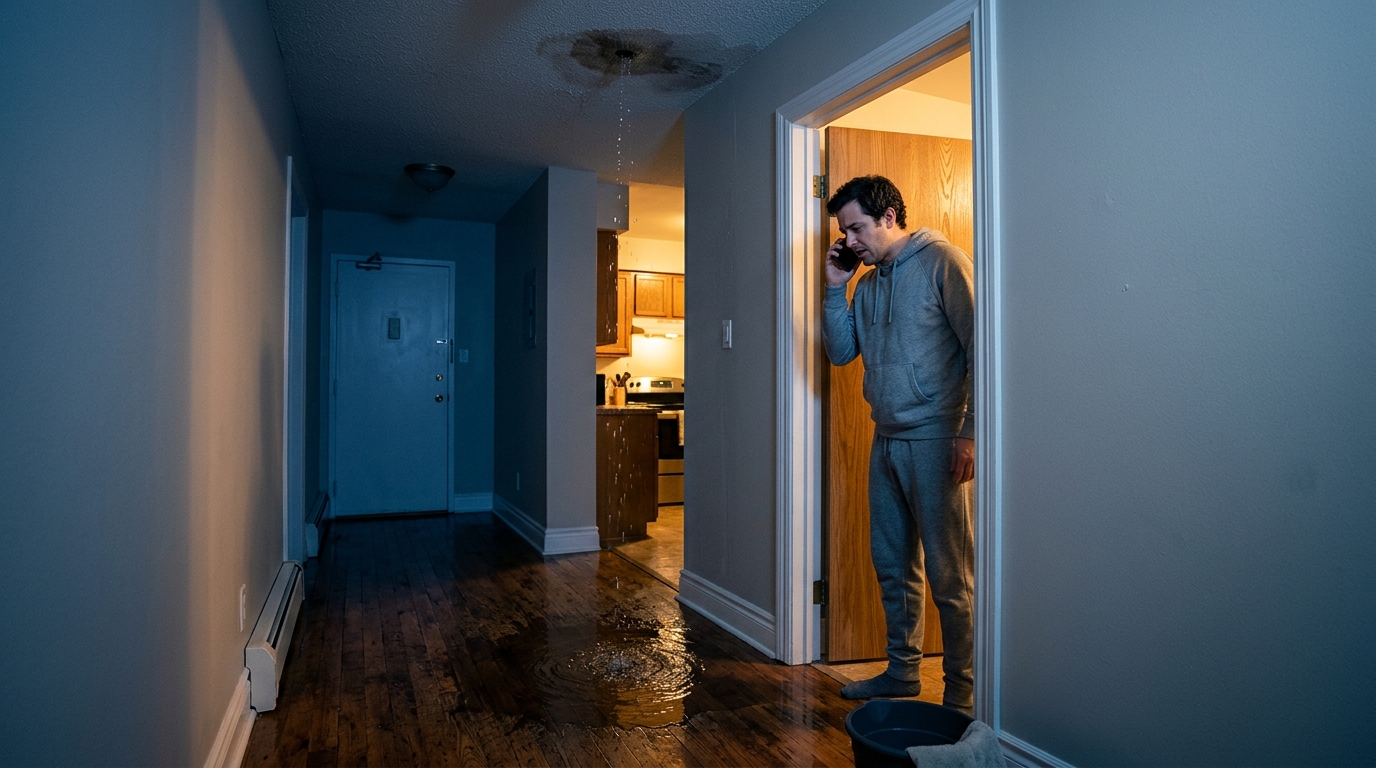
Many of these calls arrive outside office hours. A burst pipe at 11 p.m. does not wait until Monday. A prospective renter who calls at 6 p.m. and reaches voicemail often calls the next listing on the page. For a small management company with one or two office staff, the phone becomes a constant interruption that pulls people away from inspections, owner reporting and showings.
An AI receptionist solves the coverage problem. It picks up on the first ring, every time, with no hold queue and no voicemail maze.
What an AI receptionist actually does for a property manager
An AI receptionist is software that answers phone calls with a conversational voice, understands what the caller wants, responds with approved information, and records what happened. It is not a phone tree where callers press 1 for maintenance. The caller speaks normally, and the system responds in kind.
For property managers, the useful tasks fall into a few groups.
Maintenance intake
The AI collects the details a maintenance coordinator needs: caller name, unit or address, a description of the problem, how urgent it is, and a callback number. A clean intake means your team can dispatch a vendor without calling the tenant back to ask basic questions.
Emergency triage
Gas smells, flooding, no heat in winter, fire damage and lockouts need a faster path than a dripping faucet. A good AI receptionist asks the right screening questions and routes true emergencies to your on-call person while logging routine issues for the next business day.
Leasing and prospect questions
Prospects ask the same questions repeatedly: Is the two-bedroom still available? Are dogs allowed? What is the application process? The AI answers from information you provide and captures contact details so your leasing agent can follow up.
Appointment scheduling
Showings, move-in walkthroughs and inspection windows can be booked during the call. This removes the back-and-forth of phone tag, which is one of the biggest time sinks in leasing.
Call records
Every call produces a transcript and summary. For property managers this is more than convenience. It is a record of when a tenant reported an issue and what was said, which matters if a repair dispute or habitability complaint comes up later.
Eight criteria for choosing the best AI receptionist for property management
Rather than trusting a feature list, test any option against these eight criteria.
- Answers every call immediately. No missed calls during peak times, such as the first of the month or after a storm when many tenants call at once.
- Sounds natural. Tenants in a stressful situation should not feel they are fighting a robot.
- Handles urgency differently from routine requests. The system must separate a flooded basement from a request for a new mailbox key.
- Delivers transcripts and summaries. You need to read what happened in 20 seconds without listening to a recording.
- Books appointments. Showings and maintenance access windows should be scheduled on the call.
- Passes calls to a human when needed. Owners, attorneys and upset tenants sometimes need a person.
- Works with your existing phone number. You should not need to reprint signs or tell hundreds of tenants about a new number.
- Costs less than the staff time it replaces. Compare the monthly cost to the hours your team spends on phones.
Tactly: where it fits for property managers
Tactly is an AI receptionist for small businesses that depend on the phone, and property management is a natural match. It answers incoming calls, talks with callers in a conversational way, schedules appointments, and gives you transcripts and call summaries so you know what happened without listening to recordings.
Here is where Tactly fits against the eight criteria above:
- Every call answered: Tactly picks up around the clock, including nights, weekends and holidays.
- Natural conversation: callers speak normally instead of navigating menus.
- Scheduling: it can book appointments such as showings or maintenance visits during the call.
- Records: each call generates a transcript and a summary you can review at a glance.
Tactly is built for the owner-operated and small-team business, which describes most property management companies in North America. If you manage 30 doors or 300, and your front desk is one person or no one, that is the situation it was designed for. It is not a large enterprise contact center platform, and it does not need a dedicated IT team to run.
AI receptionist vs live answering service vs voicemail
Property managers usually compare three ways to cover the phone. This table shows how they differ on the points that matter most.
| Factor | AI receptionist | Live answering service | Voicemail |
|---|---|---|---|
| Availability | 24/7, every call | Often 24/7, but agents are shared | 24/7, no interaction |
| Wait to be answered | None | Possible during busy periods | None, but callers leave a message |
| Handles several calls at once | Yes | Limited by agent count | Yes |
| Books appointments | Yes | Depends on the service | No |
| Written record of each call | Transcript and summary | Usually a short message note | Audio only |
| Caller experience | Conversational, consistent | Human, varies by agent | Many callers hang up |
The biggest practical difference for property managers is volume. After a storm, a heating failure or a rent-due date, dozens of tenants call within the same hour. A live service with a fixed number of agents can put callers on hold. An AI receptionist answers them all at once.
A realistic day with an AI receptionist in place
Consider a small management company with 120 units across several buildings and two staff members. Here is how a typical 24 hours changes.
7:15 a.m. A tenant calls to report a dishwasher leaking onto the kitchen floor. The AI asks whether water is actively flowing, whether the tenant can shut off the valve, and which unit it is. It logs the issue as urgent and notes the contact number. The maintenance coordinator reads the summary at 7:45 and dispatches a plumber.
11:30 a.m. A prospect asks whether a one-bedroom is available and whether cats are allowed. The AI answers from the details you provided, then offers a showing time. The prospect books for Thursday.
3:00 p.m. A property owner calls to ask about a repair estimate. The AI recognizes it is an owner call, collects the question and passes it along for a personal reply.
10:40 p.m. A tenant reports a lockout. The AI follows your after-hours instructions for lockouts and records the details so the right person is contacted.
Nothing in that day required your staff to be on the phone at the moment of the call. Everything is waiting in summaries when they sit down.
Why transcripts and call summaries matter in property management
Many owners treat transcripts as a nice extra. In property management they are closer to a necessity.
- Documentation: a dated record shows when a tenant first reported a problem. That protects you when a repair timeline is questioned.
- Accountability: summaries let a manager confirm that every request was acted on.
- Training and consistency: reading how callers phrase questions shows you what belongs in your FAQ and policies.
- Owner reporting: you can show property owners exactly how many calls came in and what they were about.
- Speed: reading a three-line summary takes seconds. Listening to a two-minute voicemail takes two minutes.
When comparing options, treat the quality of transcripts and summaries as a core feature, not a footnote.
How to set up an AI receptionist for your property management company
Setup quality decides whether the AI helps or annoys your tenants. Work through these steps before you go live.
Step 1: List your call types
Write down the ten most common reasons people call you. For most property managers these include maintenance, availability, application status, rent questions, lockouts, noise complaints and owner inquiries.
Step 2: Define what counts as an emergency
Be specific. Gas odor, flooding, no heat in cold weather, sparking outlets, fire, break-ins and lockouts are common examples. Write down who should be contacted for each and in what order.
Step 3: Gather approved answers
Collect your pet policy, application fee and process, showing hours, office hours, payment methods and the steps for submitting a maintenance request. The AI is only as accurate as the information you give it, so keep it current.
Step 4: Decide what to hand to a human
Legal threats, eviction questions, discrimination complaints, safety incidents and owner disputes belong with a person. Tell the system to take a message and flag these calls, not to improvise.
Step 5: Set up scheduling rules
Decide which days and times are open for showings, how much buffer you need between appointments, and which staff members handle which properties.
Step 6: Test with real scenarios
Call the line yourself and play different roles: an angry tenant, a confused prospect, a caller who interrupts. Fix gaps before tenants find them.
Step 7: Tell your tenants
A short note in your tenant portal, email or lease welcome packet explaining that calls are answered 24/7 and how emergencies are handled builds trust. Most tenants care far more about getting a fast response than about whether a person or software answers.
Step 8: Review summaries weekly
For the first month, read the call summaries each week. You will spot missing answers and adjust. After that, a monthly review is usually enough.
Handling after-hours calls effectively
After-hours calls are where property managers feel the most pain and where an AI receptionist delivers the clearest return. A good after-hours plan has three layers.
- Screen: the AI asks short questions to decide whether the issue is urgent.
- Route: true emergencies go to your on-call contact. Routine issues are logged for the morning.
- Confirm: the caller is told what happens next, such as "someone will contact you within the hour" or "your request will be reviewed first thing tomorrow."
The confirmation step matters more than most people expect. Tenants become angry when they do not know whether anyone heard them. A clear statement of the next step lowers frustration even when the repair itself must wait.
Common mistakes property managers make with AI call answering
- Skipping the emergency list. Without clear rules, urgent calls can sit in a queue.
- Feeding in outdated policies. If your pet fee changed, update the information the same day.
- Never reading the summaries. The value is in acting on them.
- Hiding the change from tenants. Be open about how calls are handled.
- Expecting it to replace judgment. Disputes, legal matters and sensitive conversations need a person.
- Measuring the wrong thing. Track missed calls, response time to emergencies and booked showings, not just call volume.
How to measure whether it is working
Pick four numbers and check them monthly:
- Missed call rate: it should drop to near zero.
- Time from call to action: how long it takes your team to respond to a logged maintenance request.
- Showings booked from calls: compare against your previous months.
- Staff hours on the phone: ask your team to estimate the change.
If the missed call rate falls and your team spends fewer hours answering routine questions, the system is paying for itself.
The future of business communication for property managers
Tenants already expect fast answers at any hour, the same way they expect package tracking and instant online payments. As more small businesses answer every call within seconds, the standard rises for everyone. Property managers who still send callers to voicemail will lose prospects and frustrate residents. Those who pair AI call answering with good policies and a responsive team will look larger and more reliable than they are, which is a real advantage for an independent company competing with big management firms.
Tactly FAQ for property managers
What is the best AI receptionist for property managers?
The best choice answers every call instantly, separates emergencies from routine requests, books showings and maintenance visits, and sends transcripts and summaries. Tactly provides call answering, scheduling, transcripts and call summaries for small businesses, which suits independent property managers and small management teams.
Can an AI receptionist handle maintenance emergencies?
Yes, when you define what counts as an emergency and who to contact. The AI asks screening questions, flags urgent issues such as flooding or gas odor, and records the details. You should still keep a clear on-call process for your team.
Will tenants be upset about talking to an AI?
Most tenants care about speed and a clear next step. Being answered immediately, rather than reaching voicemail, usually matters more than who is answering. Telling tenants in advance how calls are handled also helps.
How is an AI receptionist different from a live answering service?
An AI receptionist answers unlimited simultaneous calls and has no wait time, while a live service depends on agent availability. Both can take messages. The AI also provides a transcript and summary of every call for easy review.
Do I need to change my phone number to use Tactly?
Plan to keep your existing number visible to tenants and prospects. Calls are directed to the AI receptionist, so you avoid reprinting signs, updating leases or notifying residents of a new number.
